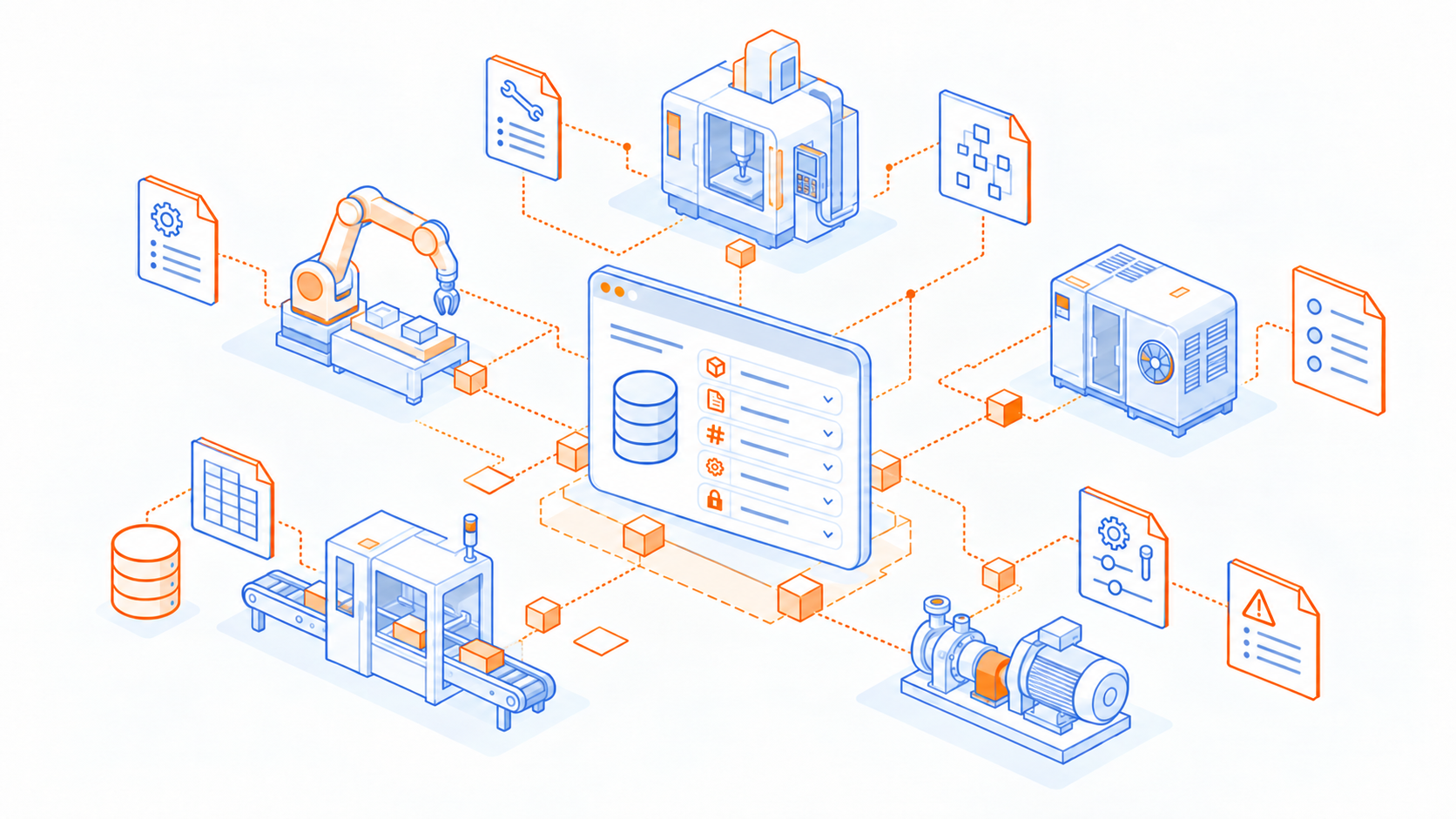
In 2021 we were one of the first companies building an enterprise AI product. Over the years we learned a ton about what makes industrial AI succeed or fail. One of the key learnings is the importance of metadata. This short article might get a bit technical here and there where necessary, but I encourage you to read through because I believe that this topic is important for any company that wants to make their documentation usable for AI. And after all, I believe this is going to be one of the make or break aspects of companies moving forward.
When using KNOWRON, a service technician arrives at a customer site to respond to a service request and walks up to a machine they may never have seen before. They scan the QR code on the housing and get exactly the documentation they need in the right language. It feels simple because, for the technician, it is.
In order for information access to be easy and correct for the technician, some more difficult work needs to happen much earlier. In this article I want to share some of the key intricacies about metadata for industrial documentation and what we have learned at KNOWRON over 5 years in the field about solving it. If this is relevant for your company and you would like to dive deeper, please reach out at ask@knowron.com.
The brownfield challenge
Before a QR code can return anything useful, the system needs answers to some fairly basic questions. Questions like, which documents apply to which machine? Not just the operating manual, but the correct revision, wiring diagrams, service bulletins, spare-parts lists and anything else tied to that model or serial-number range.
Then there’s access. Who should have access to the document? Can a service partner see it? Is it internal only? A wiring diagram and a customer-facing user guide may relate to the same machine, but that doesn’t mean they should be available to the same people.
And finally: where is all this information actually stored? Usually, the answer is “everywhere”. Some of it is in SAP, some is in a document management system, some lives on a file server.
The knowledge exists, just not captured in a usable form
Manufacturers usually know which documents belong to which machines. The problem is that this knowledge is rarely captured in a consistent, structured way. An experienced engineer may know that one version of a manual applies up to a certain serial number and another version applies after it. Someone in service knows that a bulletin issued last year replaced an older instruction. A colleague in compliance knows which documents can be shared with customers and which must stay inside the company.
But if it only exists in people’s heads, filenames, folder structures and disconnected systems, software can’t do much with it. This is where metadata comes in. Metadata tells a system what a document is, which product or machine it applies to, which version is current, what it replaces and who is allowed to see it. In many companies, that information was never recorded properly. In order for AI to work well in your company, you will need to capture this knowledge in a machine readable way. Big bonus: This will not only enable AI for your business, but also safeguard you from dependencies of losing an experienced employee. If specialised knowledge is stored in (meta-)data, it will stay with you.
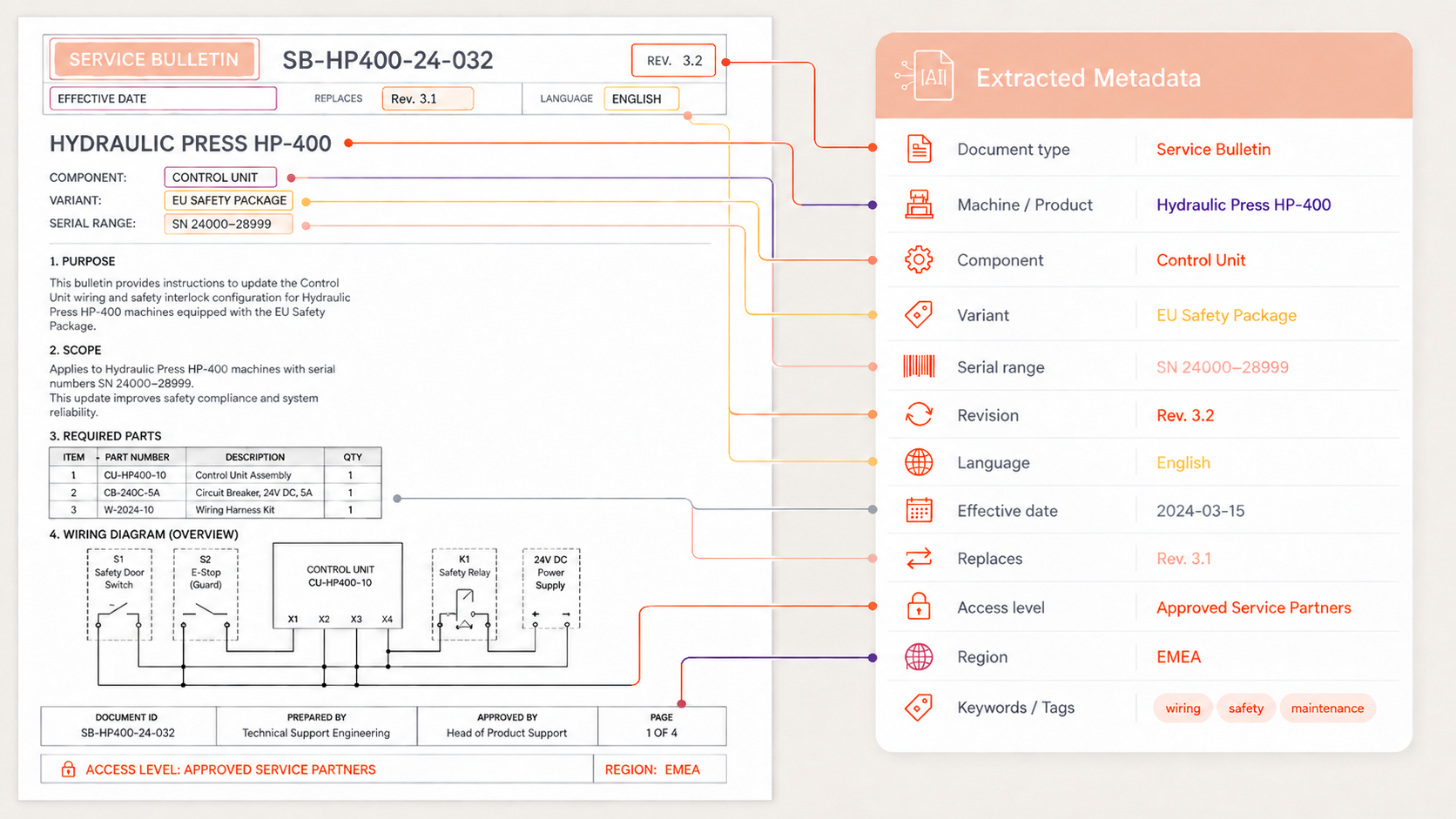
Manual tagging doesn’t scale
The obvious solution is to ask people to tag every document by hand. For a small, stable document library, that might work. For an industrial knowledge base with hundreds of thousands of files, product variants, revisions and local versions, it quickly becomes unrealistic.
The work is slow and expensive and it never really ends. While one team is cleaning up the existing archive, engineering is releasing new revisions, service is publishing new bulletins and another product variant is entering the field. And even when the tagging is finished, it starts going stale almost immediately.
How we solve it at KNOWRON
KNOWRON uses AI to do the work that doesn’t scale well manually: reading large volumes of documentation, finding relationships between files and proposing metadata. The system can suggest which machine a document belongs to, which version or serial range it covers and how it should be classified. It can also propose whether a document should be public, internal or available only to approved partners.
The important step to note however is: we follow a strict human-in-the-loop approach. It’s an important distinction especially when access rights are involved. AI can prepare the decision and surface the relevant information, but the company remains responsible for deciding what can be shown and to whom.
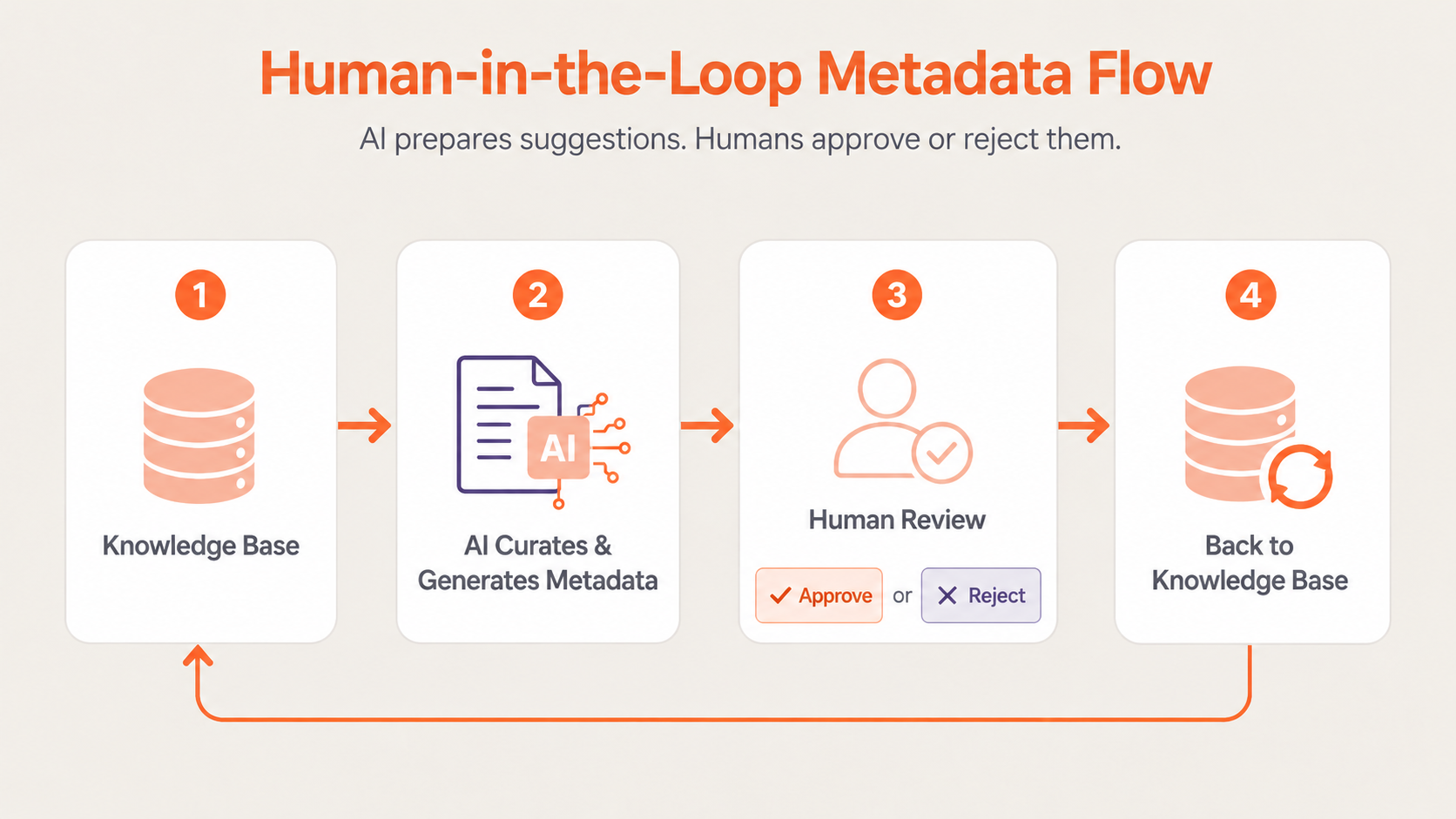
It also makes the process easier to audit. There’s a record of what was proposed, what was approved, who approved it and when the change took effect, making governance a first class member of the entire process.
KNOWRON keeps improving your data continuously
A metadata project can’t be treated as a one-time clean-up. New documents will be added, specifications will change or engineering will release another revision. If the metadata doesn’t change along with the documentation, the system slowly starts to decay and go out of date.
That’s why KNOWRON continues to review changes in the knowledge base and propose updates. The same approval process still applies: the system identifies what may need to change, and a person decides whether that change is correct.
The result is a knowledge base that stays useful after the initial rollout, rather than becoming another system everyone tested for six months and then quietly stopped using.
What is needed for Enterprise AI to roll out successfully
After working for more than 5 years in the field I can say for certain that the data foundation is one of the key pillars of companies for successful AI rollouts.
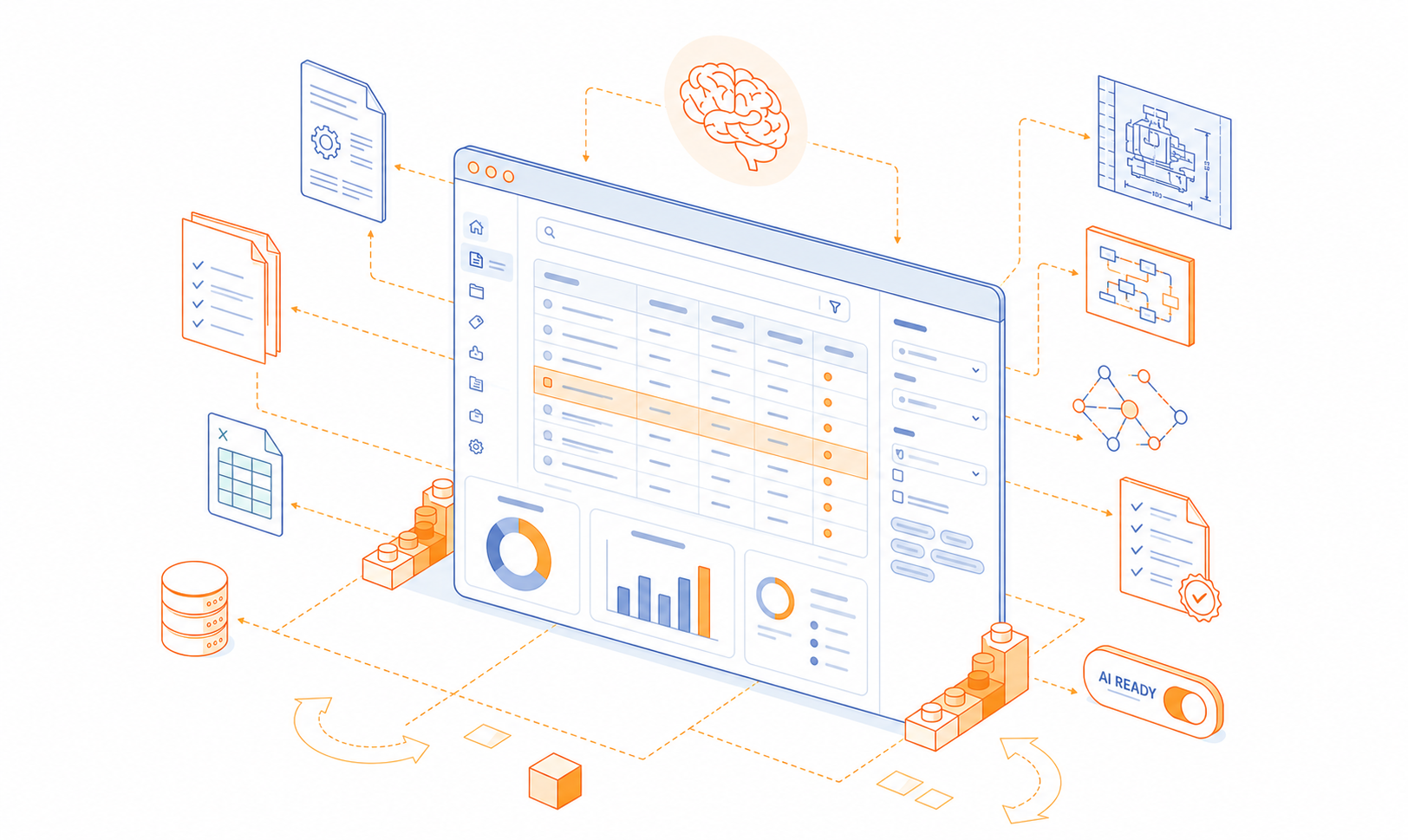
When the technician scans the QR code and immediately receives the right document, the visible experience is simple. Underneath it needs to be a constantly evolving system: documents linked to the correct machines, revisions kept current, access rules applied properly and human decisions recorded where they matter.
AI Models may help read, classify and connect information at scale, but they can only produce useful results when the underlying knowledge is structured, governed and continuously maintained. Without that foundation, even the most impressive interface will eventually return incomplete, outdated or inappropriate information.
In industrial environments, metadata is not administrative housekeeping. It is the infrastructure that allows AI to deliver the right information to the right person, for the right machine, at the right time. We are happy to take a look at your data foundation and outline how we would work with you towards a successful KNOWRON rollout. Looking at the data is always the first step, as we have done with many SME and DAX companies over the years. In my experience, the way our Team supports clients with their data is one of the main reasons our rollouts succeed. Reach out at ask@knowron.com.


.png)